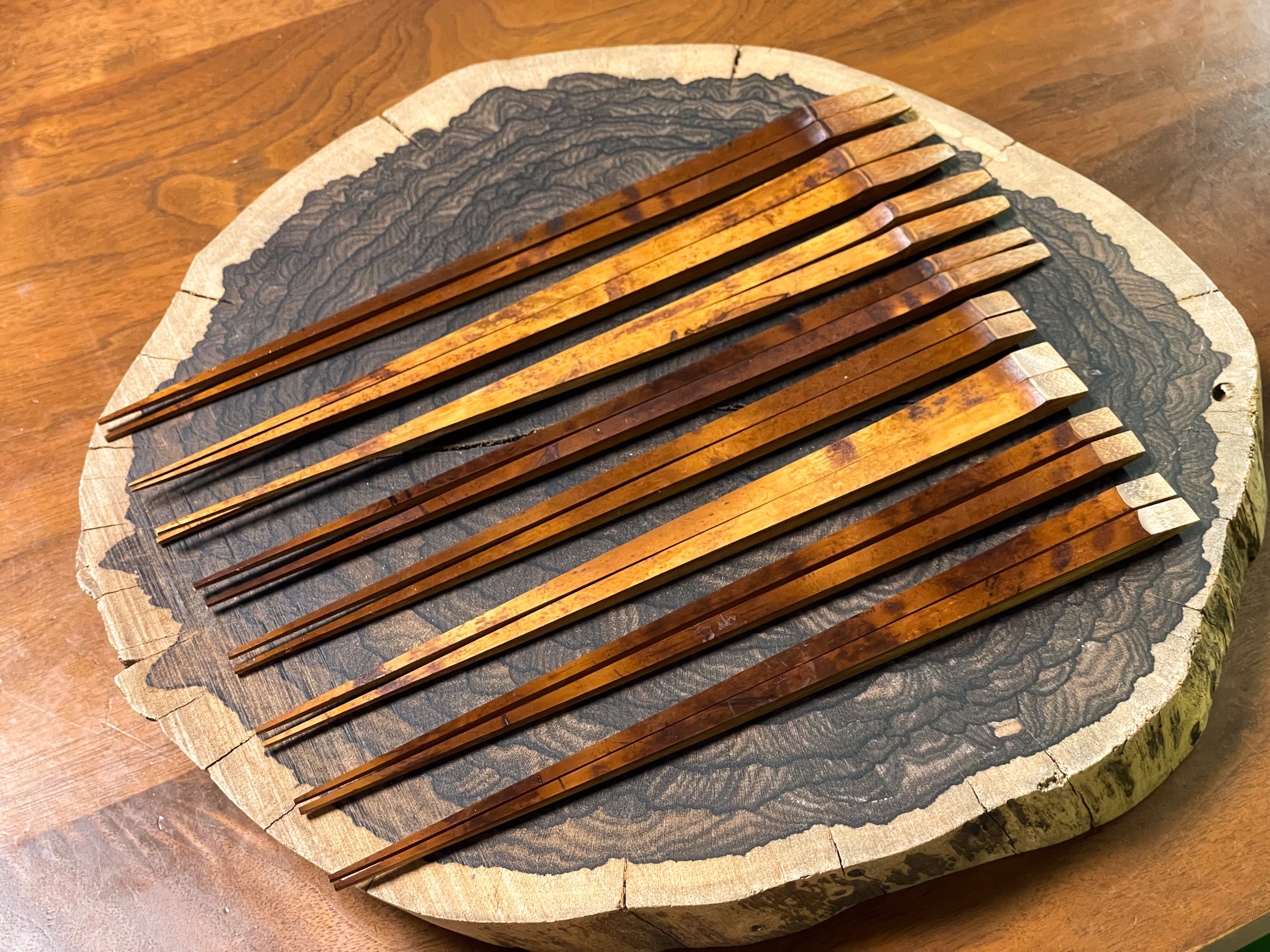
煤竹の景色を愉しむ
囲炉裏の煤で燻された表皮は深みのある濃い飴色に変色し、ところどころには紐で縛られた跡が明るい色合いとして残ります。
茅葺き屋根を解体した段階では、表面に真っ黒な煤が付着しているため、煤を落とさないと本当の竹の表皮の色はわかりません。
煤を丁寧に拭き取り、表皮があらわになると絶妙なグラデーションや文様が現れます。
これを景色として愉しむ、他に二つとない素材が得られます。
The outer layer of the bamboo, smoked by the soot from the hearth, has turned a deep, dark brown, with traces of where it was tied remaining in lighter shades.
When the thatched roof is dismantled, the surface is covered in a thick layer of black soot, so the true color of the bamboo's outer layer cannot be seen until the soot is removed.
After carefully wiping away the soot, the outer layer is revealed, revealing exquisite gradations and patterns.
This creates a unique material that can be enjoyed as a landscape, unlike any other.
百年以上の時間が紡ぐ飴色の美
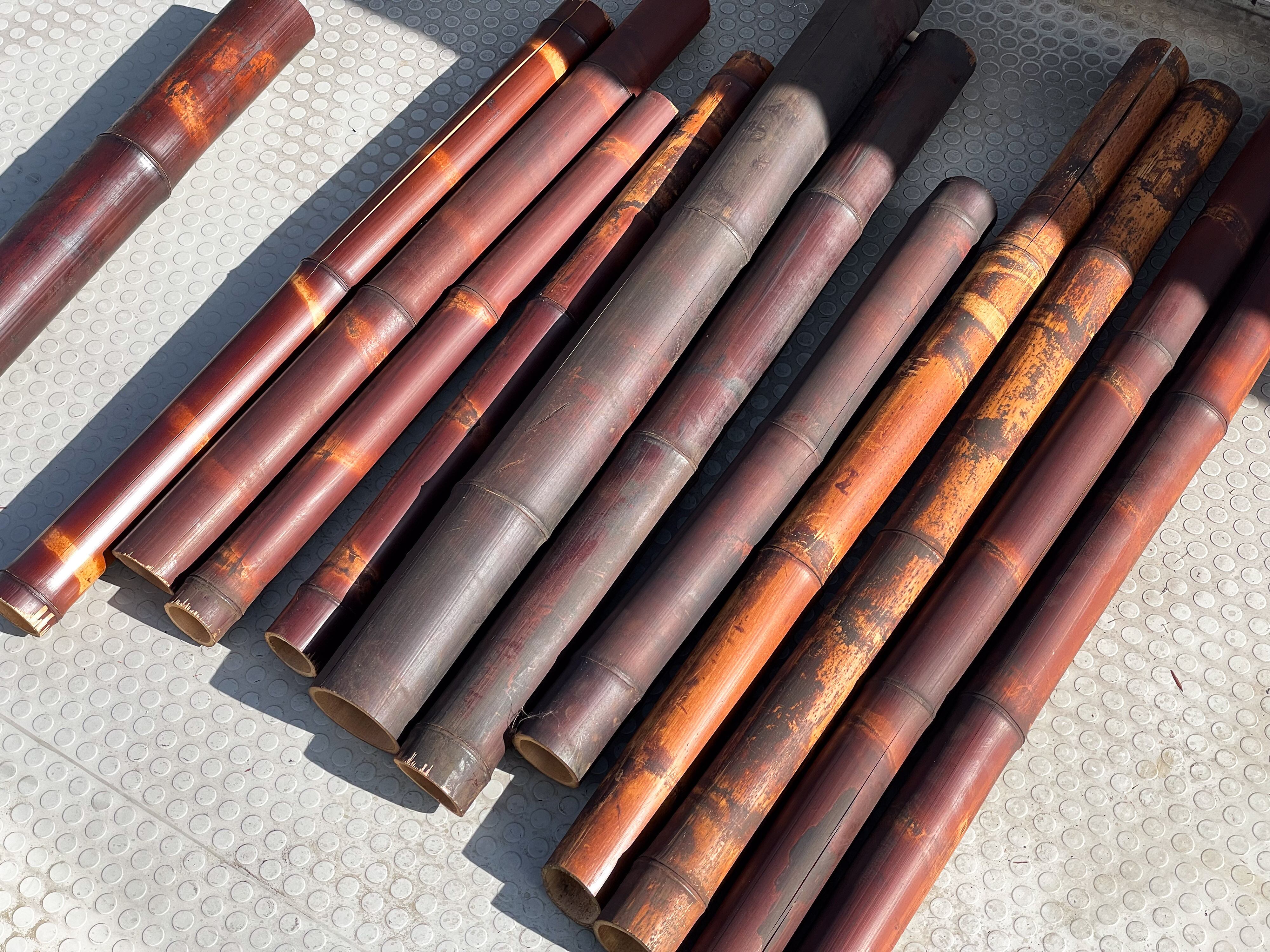
竹は切りたてのものは若竹色。防虫・劣化防止のため、油抜きをして数年間干したものは白竹(しろたけ)と呼ばれます。
白竹は全体が肌色のような色合いで、籠や箸などに加工されます。
対して当工房で使用している、煤竹(すすだけ)は、百年以上の間、囲炉裏の煤に晒すことでゆっくりと油抜きが行われ、飴色に変化していきます。設置されていた場所や条件でさまざまな表情に変化し、これらを景色として愉しむことができます。
Deep Colors Woven Over More Than a Hundred Years
Freshly cut bamboo is a young bamboo green. To prevent insect damage and deterioration, it is degreased and dried for several years; this is called white bamboo (shirotake).
White bamboo has an overall skin-tone color and is processed into baskets, chopsticks, and other items.
In contrast, the sooty bamboo (susudake) used in our workshop is slowly degreased over more than a hundred years by being exposed to soot from a hearth, changing to an amber color. It changes its appearance in various ways depending on the location and conditions in which it was installed, and these can be enjoyed as part of the scenery.